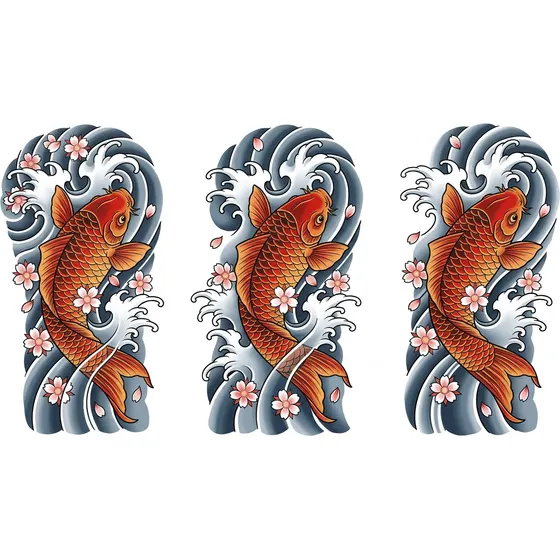
“Koi fish swimming upstream through cresting waves and cherry blossoms”
Generate this
Style
Japanese tattoos—often called irezumi in the broad design sense—are a grammar of motion more than a single flash motif. Koi, dragons, tigers, and peonies sit inside weather: waves, wind bars, clouds, maple, or cherry blossom that wrap the limb.
“Koi fish swimming upstream through cresting waves and cherry blossoms”
Generate this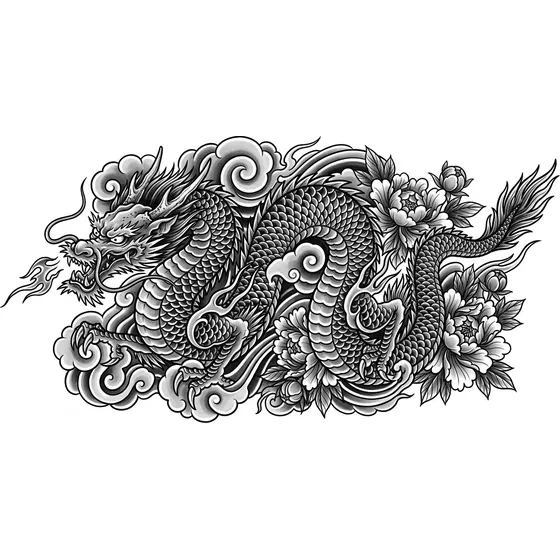
“A coiled dragon among stylised clouds and peony flowers”
Generate this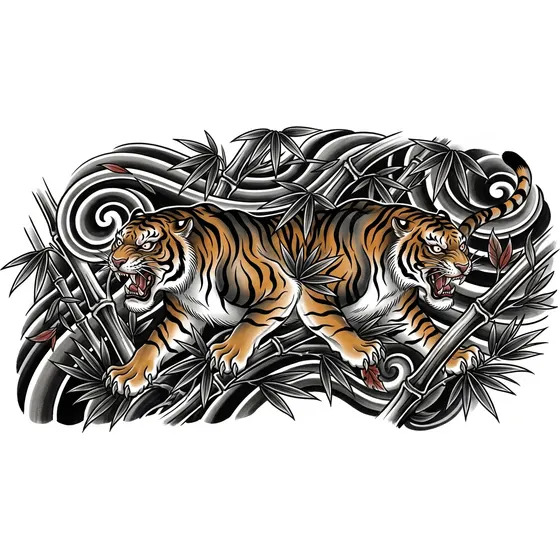
“A tiger prowling through bamboo with wind bars behind”
Generate this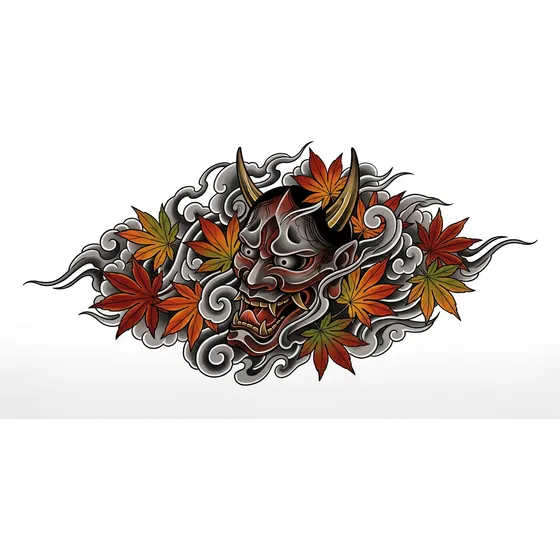
“A hannya mask surrounded by maple leaves and smoke”
Generate this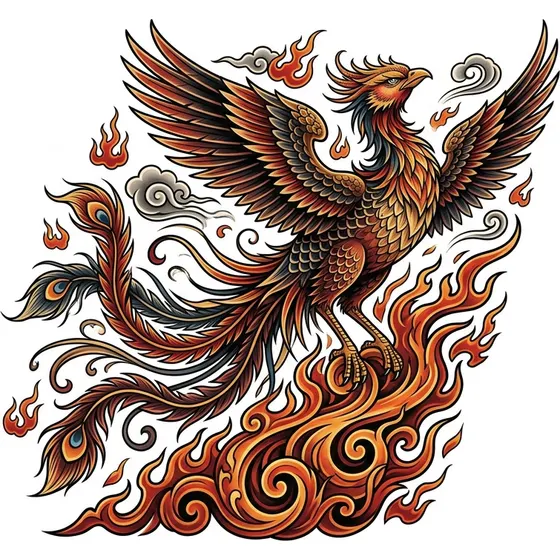
“A phoenix with long tail feathers over stylised flame”
Generate this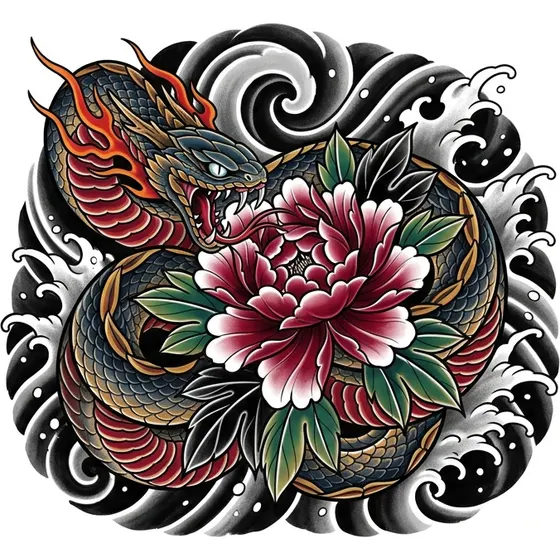
“A snake wrapped around a peony with wave background”
Generate thisOn generate.tattoo, “Japanese” is a visual system—not a substitute for specialist cultural knowledge: hero motif + supporting weather (animal or mask as the noun; waves, wind, smoke, and florals as the verbs); bold contour with soft interior—clear outlines and graded fills rather than noisy micro-texture; negative space as path—gaps between petals and crests leave routes for the eye and for later sessions; and scale that assumes the body—shoulder caps, sleeves, and back panels are native; floating square flash is the exception.
Traditional flash shares bold outlines, but irezumi-style briefs usually insist on environmental wrap. Want a solitary peony with no weather? Say so explicitly.
Strong fit: you are planning a half sleeve, full sleeve, or back/chest panel where flow matters (sleeve tattoo ideas); you already love classic subjects—koi, dragon, tiger, phoenix, snake, hannya, peony, chrysanthemum, sakura, momiji; you want high readability from a few metres away; you are willing to leave “open edges” so a shoulder piece can grow down the arm later.
Slow down / collaborate harder: sacred or religious imagery you do not understand—research with an artist who works in the tradition; micro placements that cannot hold wind bars and layered florals; cover-ups needing opaque density—misty waves may not hide older ink without studio redesign (cover-up tattoos).
The generator drafts composition and mood. Stencil, colour packing, and session pacing stay with your tattooer.
Shoulder / upper arm — hero animal or mask with cloud/wind exit paths. Cue “shoulder cap,” “wraps deltoid,” “open lower edge.”
Half sleeve (shoulder→elbow) — one hero + continuous background. Cue “Japanese half sleeve,” “waves and wind bars connecting.”
Full sleeve — story beats at shoulder, mid-arm, wrist with shared weather. Cue “full sleeve flow,” “background continuous to wrist.”
Back / rib-to-hip — large dragon, phoenix, or koi ladder. Cue “back panel,” “vertical climb,” “follows the spine curve.”
Chest / pectoral — centered mask or florals with cloud wings. Cue “chest piece,” “mirrors across sternum.”
Calf — tall vertical motif + wave column. Cue “calf panel,” “elongated,” “water rising.”
Name direction of travel in the prompt—koi upstream toward the shoulder, dragon coiling the bicep, phoenix descending the outer arm—so the piece reads as motion, not a sticker.
Classic Japanese work mixes strong black structure with colour florals or black-and-grey gradients. For references: keep a dark backbone—outlines and deep wave troughs hold the design as soft greys settle; leave steps in the midtones so petals and scales stay separated; background serves the hero—wind bars frame; they should not compete with a dragon or hannya face; and plan growth—say “space to continue” if today’s half sleeve becomes a full sleeve.
If a zoomed-out crop collapses into grey mush, simplify the weather before adding another flower. Practical art-direction notes—not medical advice.
Open generate.tattoo and set style to Japanese. Write hero + weather + placement + direction (“koi swimming up,” “open edge at elbow”). Preview free; change one layer per run (more wind bars, fewer blossoms). Optional: Pro body preview to check shoulder vs forearm wrap.
Export a reference for your artist—expect stencil and colour adjustments. See pricing; browse the gallery. Compare traditional tattoos or realism tattoos when you want Western flash or photoreal animals without irezumi weather.
These are starting points. Change the subject, the placement or the size — the generator will follow whatever you write.
Start from scratch