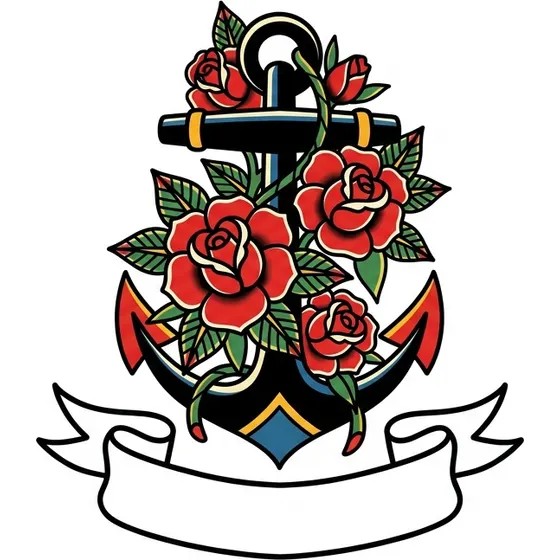
“A classic anchor wrapped in roses with a blank banner beneath”
Generate this
Style
American traditional is a set of rules more than a mood. Heavy black outlines, a small palette, flat colour, and subjects borrowed from old flash sheets: roses, daggers, swallows, panthers, ships, eagles, hearts. The rules exist so the tattoo still reads after years of sun. Use the prompts as a sheet, then expect a good artist to redraw the design in their own hand.
“A classic anchor wrapped in roses with a blank banner beneath”
Generate this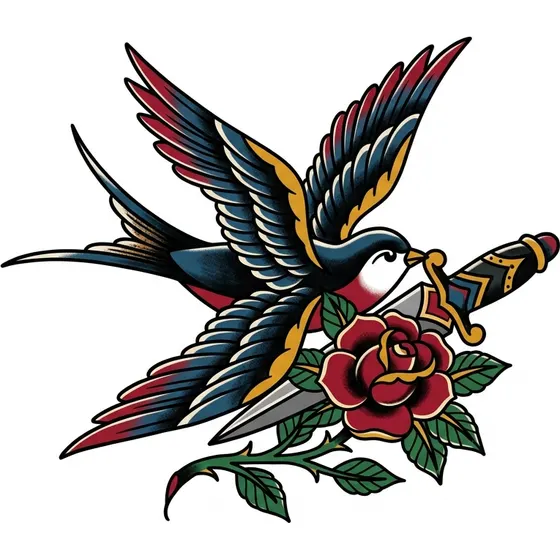
“A swallow in flight carrying a dagger and a single rose”
Generate this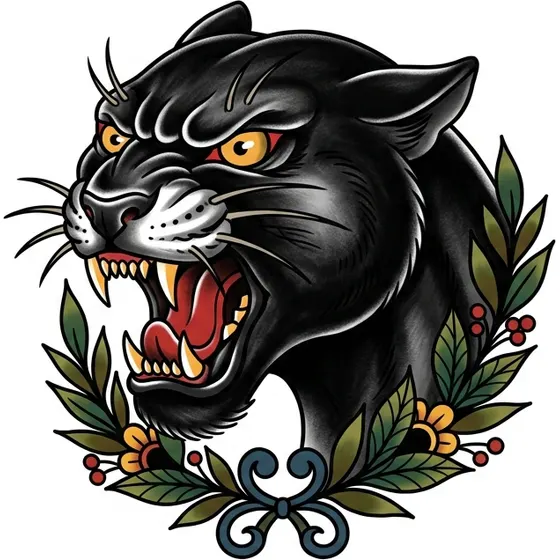
“A panther head snarling, bold outlines and heavy black shading”
Generate this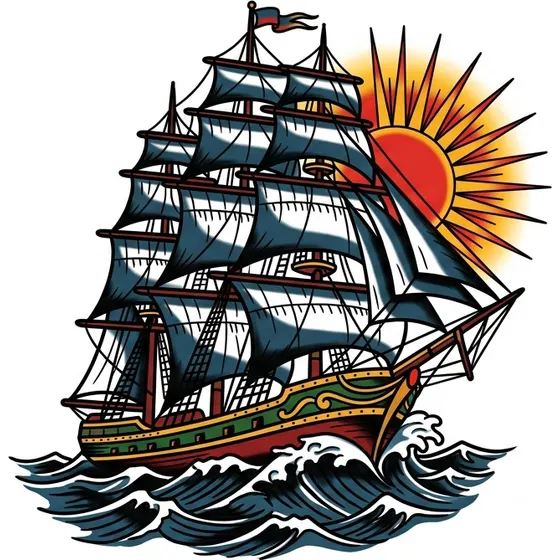
“A ship in full sail on stylised waves with a rising sun behind”
Generate this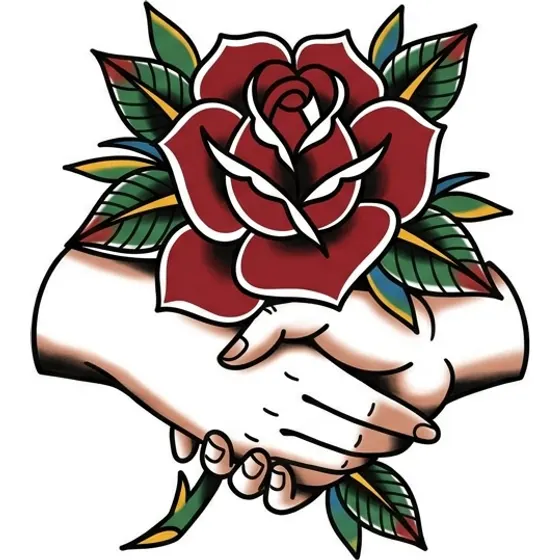
“A clasped pair of hands holding a rose, old-school shading”
Generate this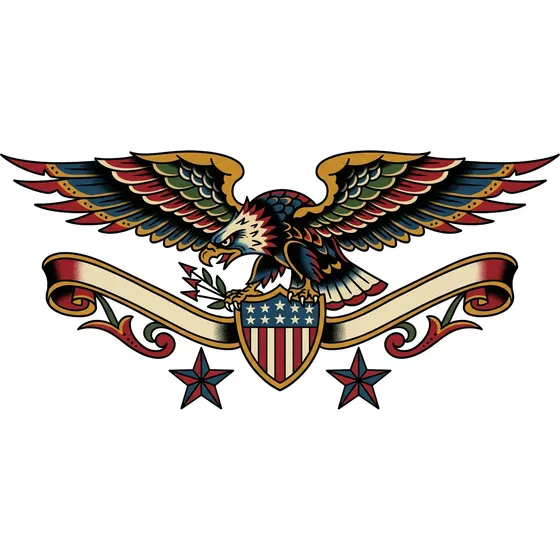
“An eagle with spread wings above a banner and two stars”
Generate this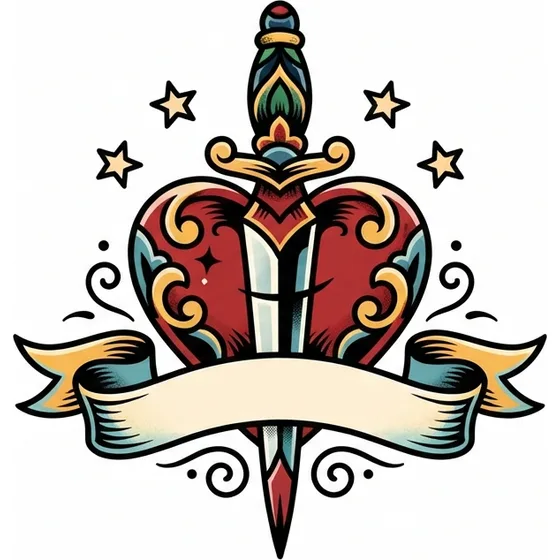
“A heart pierced by a dagger, blank banner, and three small stars”
Generate this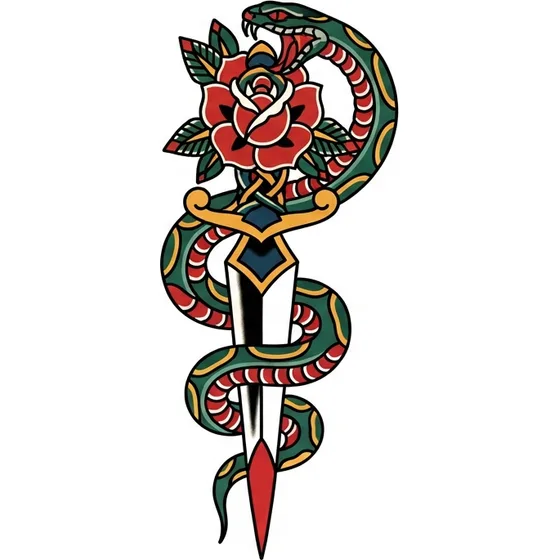
“A snake coiled around a dagger with a rose at the hilt, bold outlines”
Generate this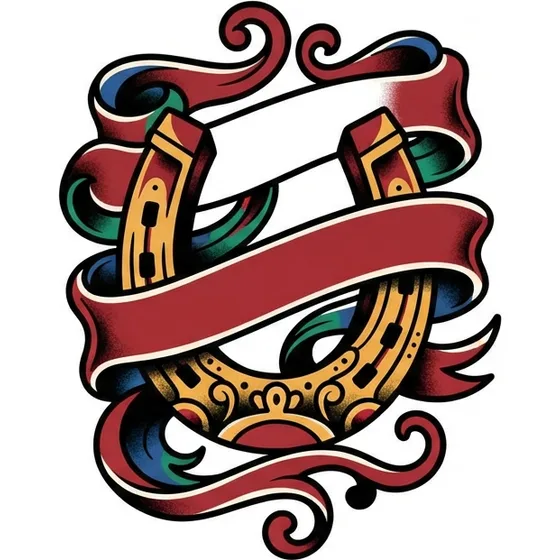
“A horseshoe wrapped in a blank ribbon, traditional flat colour”
Generate this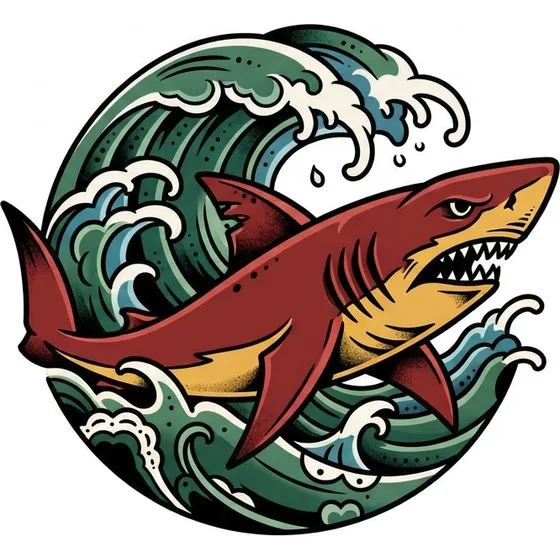
“A shark cutting through stylised waves with a limited red, yellow and green palette”
Generate this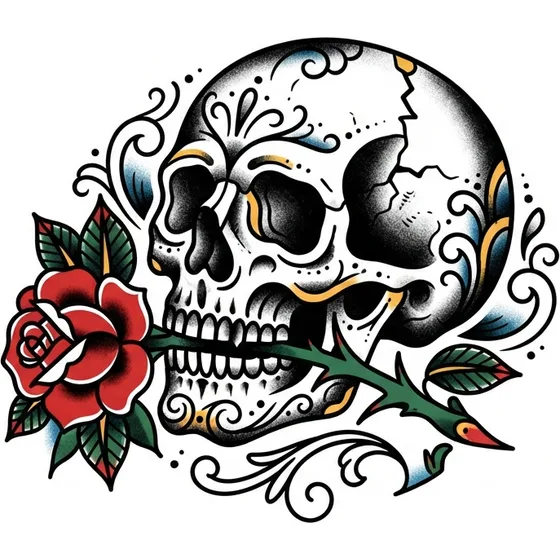
“A skull with a rose in its teeth, classic flash, heavy black shading”
Generate this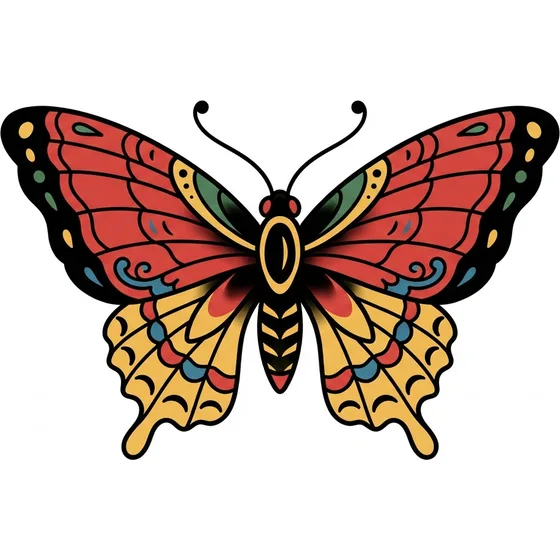
“A butterfly with bold black outlines and flat red and yellow wings”
Generate this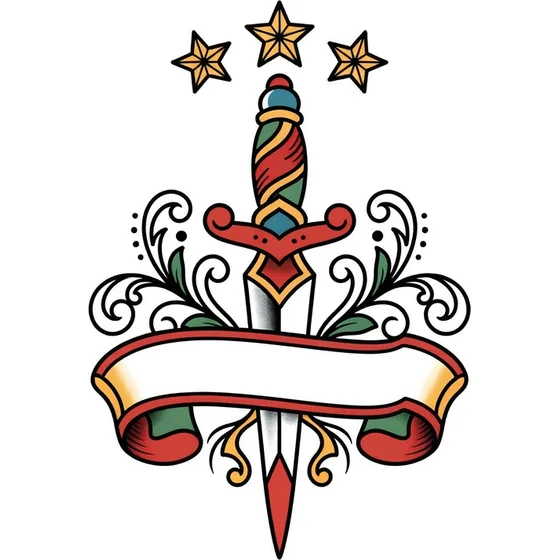
“A dagger through a blank banner with three stars above it”
Generate this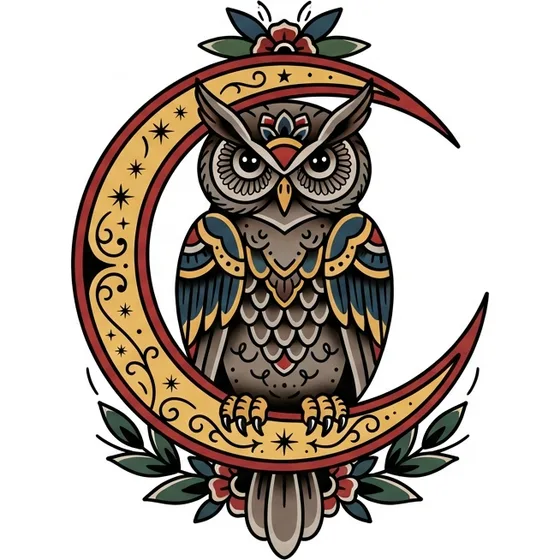
“An owl perched on a crescent moon, traditional flat colour”
Generate this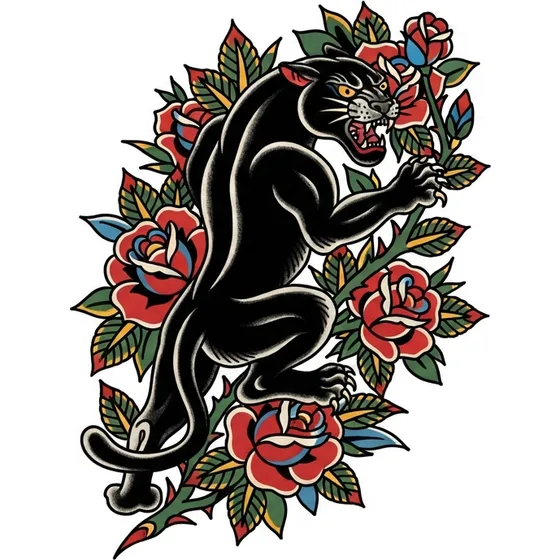
“A panther climbing through roses, bold outlines, green leaves and red flowers”
Generate this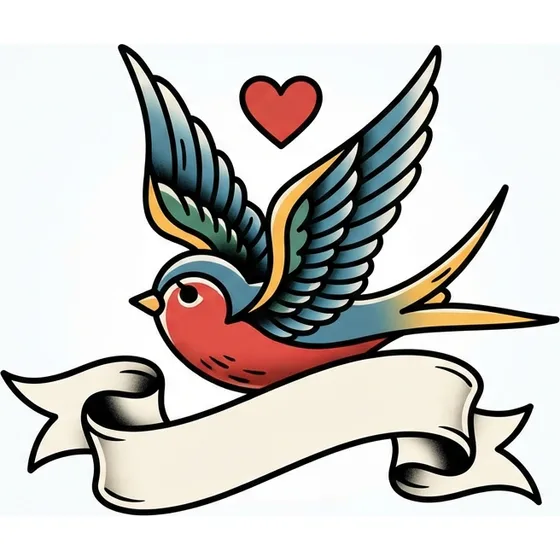
“A sparrow in flight with a small heart and a blank banner”
Generate this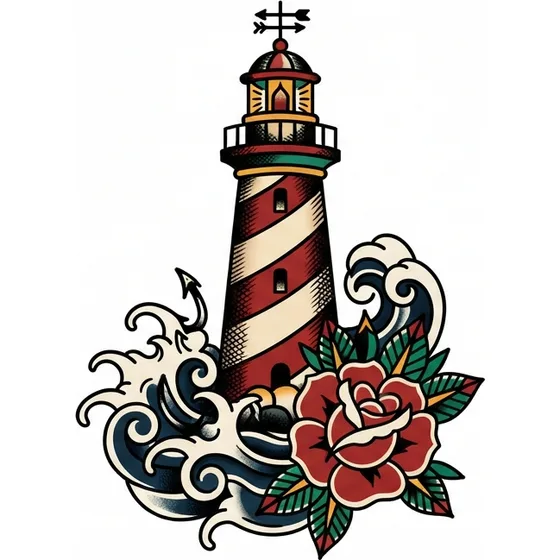
“A lighthouse with heavy black shading, stylised waves, and a single rose”
Generate this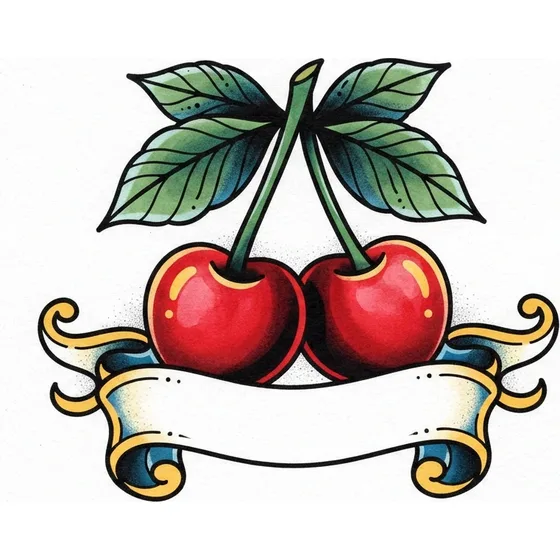
“Two cherries with leaves and a blank ribbon, American traditional flash”
Generate thisSailor and military flash had to be tattooed quickly, with few colours, on skin that was going back into the weather. The style that came out of that is still the style: a contour thick enough to hold the shape, colour in flat fields, and black as a shadow rather than a smooth gradient. You should understand the image from a few metres away.
That is a different job from neo-traditional, which keeps a strong outline but opens the palette and lets the frame get ornamental. Realism has no bold contour to lean on. A panther that looks like a photograph is not traditional. A panther that still reads when the colour has softened is.
The generator can imitate the rules. It cannot give you a shop's hand. Artists rewrite traditional every time, which is why two honest swallows should not match.
The canon is small, and that is useful. Roses, daggers, hearts, swallows, eagles, panthers, snakes, ships, anchors, sharks, skulls, stars, horseshoes, banners. They survive being reduced to an outline plus a few colour fields. A ship is a hull, sails, a sun, and stylised water — not a portrait of a harbour.
Banners belong in the grammar. Leave them blank unless you have one or two words, lettered large. A sentence in a ribbon is a lettering problem, not flash. Stars and dots are fillers, not a fix for a weak main subject.
Anything off that list still has to take the same reduction. A pet or a tool becomes a bold icon. If the meaning lives in a face or in accurate windows, choose another style, or accept that traditional will keep the symbol and drop the portrait.
The black line is what keeps the tattoo legible. Colour separates the shapes: red against green, yellow as a highlight, black as shadow and contour. A design packed solid, with no bare skin, heals darker and flatter than the fresh photo.
Lines soften and reds get quieter. What remains is the contour and the big colour blocks. That structure is why people trust the style over decades. A design that needed a thin line or a subtle blend to make sense was not following the rules.
Adding extra colours to a dagger and rose does not make it more traditional. It makes the fields harder to keep consistent. Jewel tones, decorative frames, and smoother shading are neo-traditional.
Classic subjects need room for the colour inside the outline. A panther, an eagle, or a ship the size of a coin loses the face, the feathers, or the sails. Many of these icons want to live around palm size or larger. A star, a tiny heart, or a simplified swallow can be small when it was designed small, not shrunk.
Outer forearm, upper arm, calf, chest, and thigh are the natural canvases. A rose and dagger sits there easily. Hands and the side of the neck still demand a simpler drawing. Traditional survives those spots better than fine line, and it is not a free pass.
If the piece might grow, say so. One badge is a closed design. A traditional sleeve is a sheet of badges with background — smoke, stars, more flash — not one continuous scene.
Pick one subject and generate it two or three times in traditional only. Ignore versions that sneak in soft gradients, realistic fur, or extra scenery. In the generator, the useful sentence is the object, the classic props, and "bold outlines, flat colour." Take the clearest frame to the consult as a mood sheet.
Ask the artist what they would change at your size. A good traditional tattooist will thicken a line, open a colour field, or redraw a banner rather than trace the print. That is the outcome you want. Look at their healed flash, not only the fresh photos on the day it was done.
These are starting points. Change the subject, the placement or the size — the generator will follow whatever you write.
Start from scratch