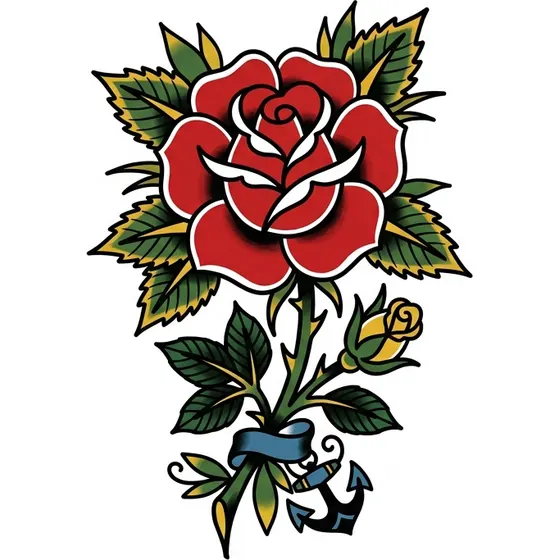
“A classic traditional rose with bold outlines and flat red petals”
Generate this
Subject
A rose tattoo stays a rose only if the petals still separate after the ink settles. Traditional roses do that with a heavy outline and flat colour. Black and grey roses do it with soft shading and open gaps. A fine-line rose is mostly the drawing of those gaps. Change the stem, the number of blooms, and the style, then take one reference to an artist who can show you healed roses.
“A classic traditional rose with bold outlines and flat red petals”
Generate this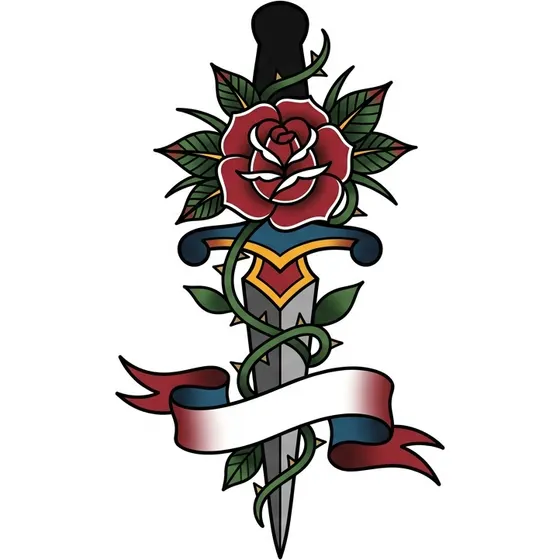
“A rose wrapped around a dagger with a banner beneath”
Generate this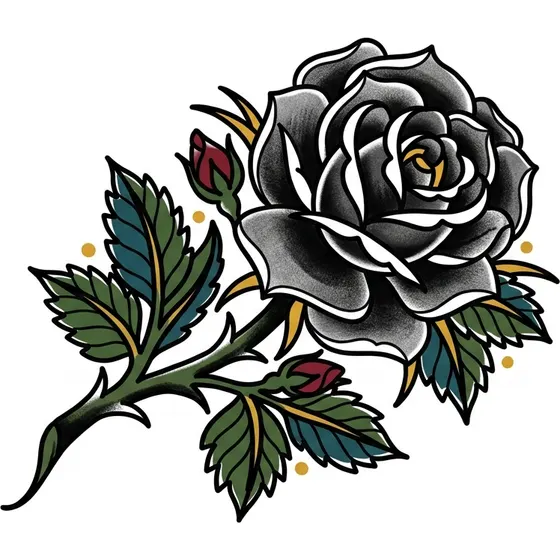
“A single black and grey rose with detailed petal shading”
Generate this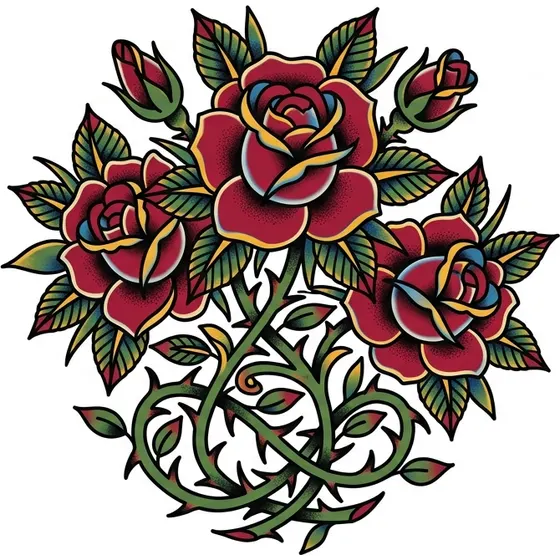
“A cluster of roses with thorned stems winding together”
Generate this
“A rose resting on an open book, fine detail in the petals”
Generate this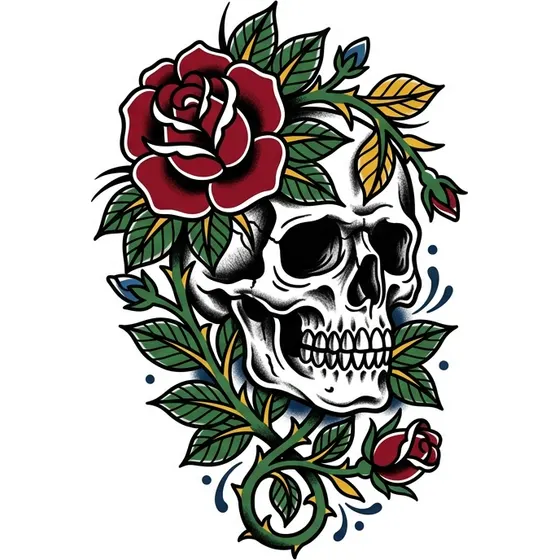
“A rose and skull composition in old school style”
Generate this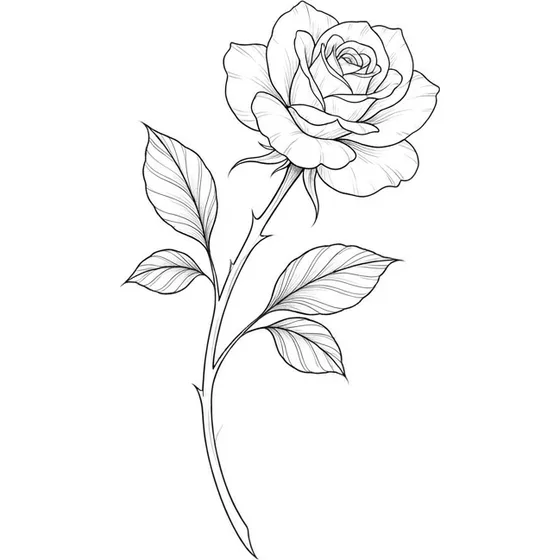
“A single open rose on a long curved stem with two large leaves, fine line, inner forearm”
Generate this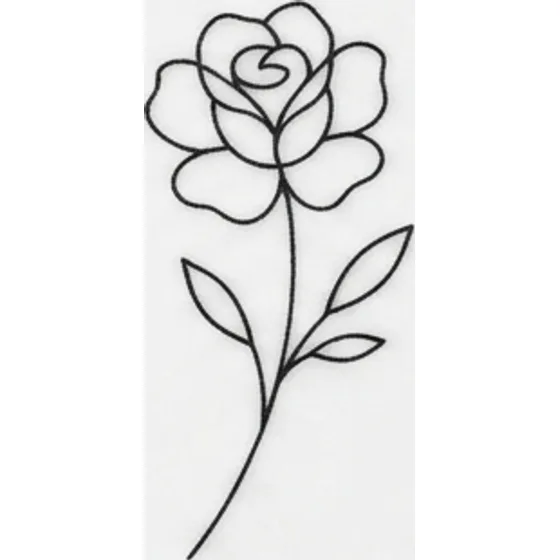
“A small five-petal rose outline with a short stem and no shading, minimalist”
Generate this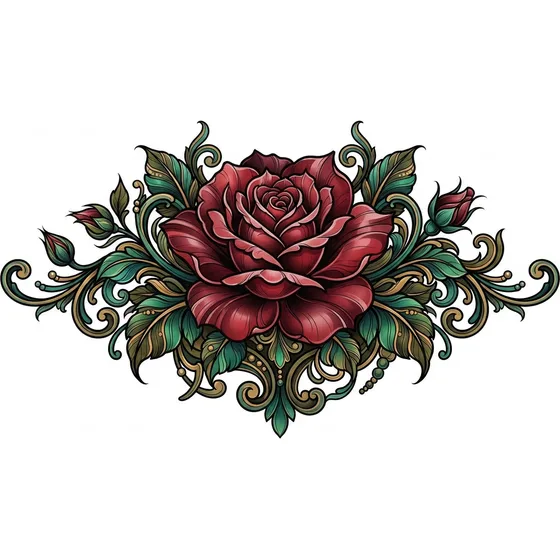
“A neo-traditional rose with layered petals, deep red, and ornamental leaves”
Generate this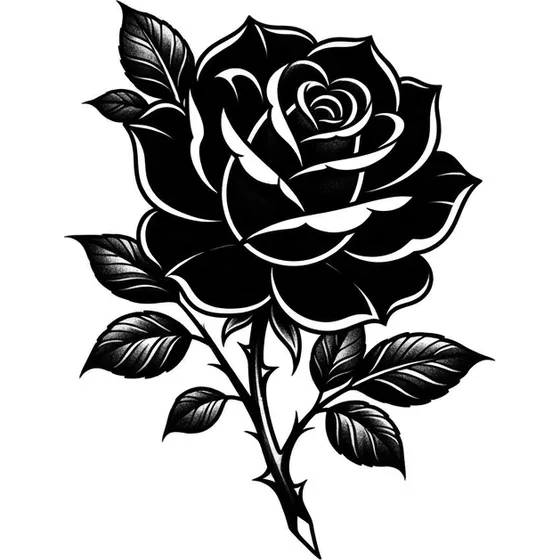
“A blackwork rose of solid black petals with narrow skin gaps between them”
Generate this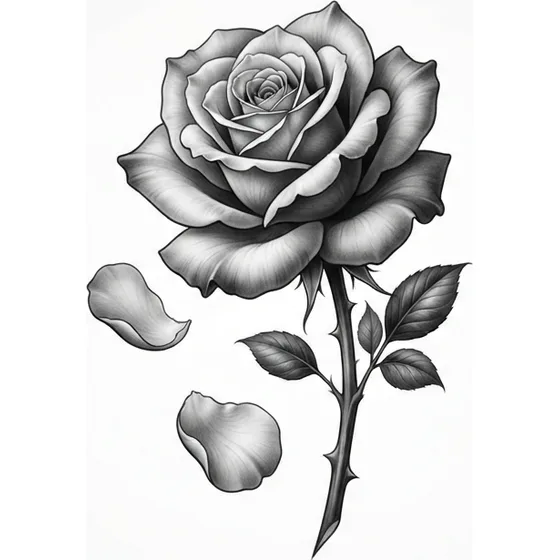
“A black and grey rose with three falling petals and soft shading, no lettering”
Generate this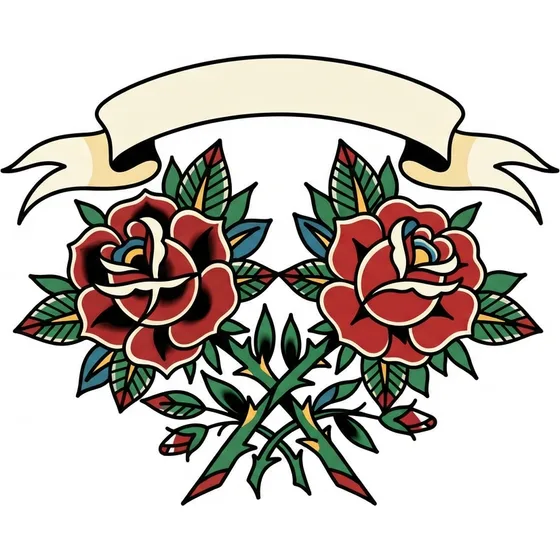
“Two crossed traditional roses with a blank ribbon and simple leaves”
Generate this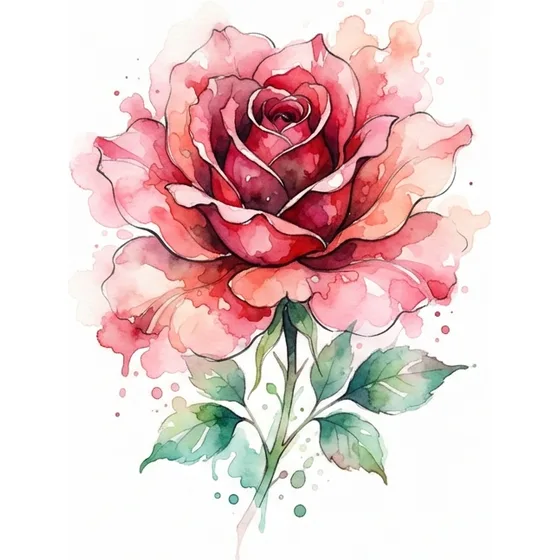
“A rose with red and pink colour softening off the outer petals, watercolour edges”
Generate this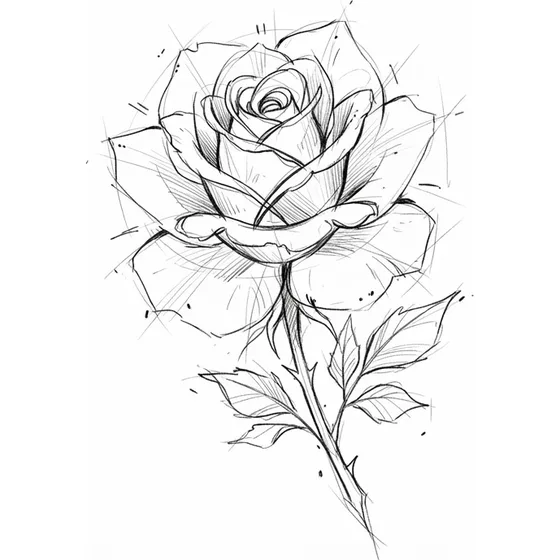
“A loose sketch rose with unfinished outer petals and visible construction lines”
Generate this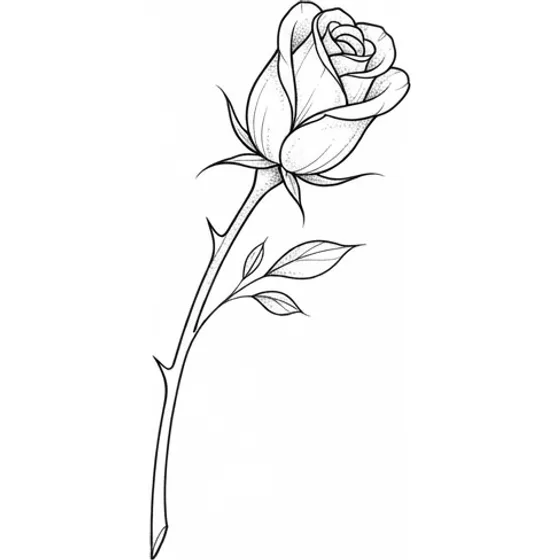
“A fine-line rose bud, closed, with a single thorn and a thin stem”
Generate this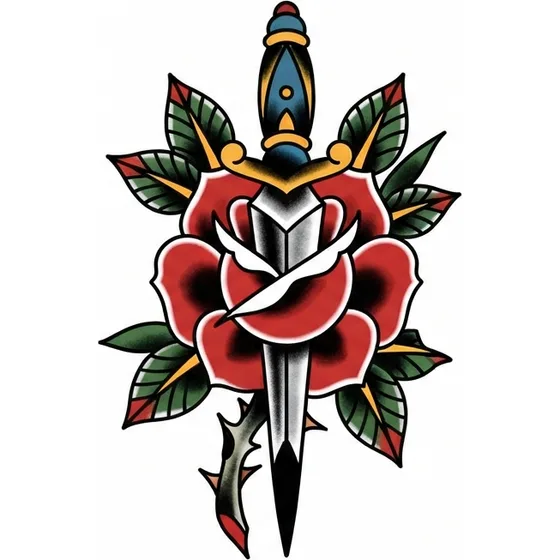
“A traditional rose with a dagger through the stem and heavy black shading”
Generate thisA tattoo rose is a simplified flower, not a botanical plate. American traditional builds it as a spiral centre, a few overlapping layers, and a clear outer contour. The outline does the explaining, so it can stay readable smaller than a realistic rose. Neo-traditional keeps that contour and adds petal layers, deeper colour, and more decorative leaves.
Black and grey drops the outline. Each petal is a gradient, and the bare skin between petals is what stops them healing into one mass. Fine line leaves the inside of the petal as skin.
One bloom is the honest brief on a forearm. A thigh, a hip, or the top of a sleeve can hold three. If you want variety, change the stage of the flower — bud, open bloom, a few loose petals — instead of stacking identical heads.
Traditional colour is narrow on purpose: red petals, green leaves, a black outline, sometimes a yellow highlight. Red quiets down in the sun. The black contour is why it still reads as a rose. That is the practical case for colour, not a code where each hue has a fixed meaning.
Black and grey avoids that shift and asks more of the shading. Judge it from healed photos, which are duller than fresh ones. Solid blackwork is a third route: petals as black shapes with deliberate skin gaps.
Tiny serrated leaves blur first, so draw fewer and make each one larger. Thorns read clearly in traditional and blackwork. In fine line, space a few of them out or they become a scratch along the stem.
The stem is how a rose uses a long placement. On a forearm, rib, or calf, one stem with a slight curve follows the limb. A flower floating in a square fights that shape. Shoulder and outer upper arm suit a rounder bloom. Chest and sternum suit one flower or a symmetrical pair. Wrist, ankle, and behind the ear only suit a handful of petals, not an interior spiral. Hands and fingers are a poor home for petal detail.
A single traditional rose needs the inner petals to be shapes, not a knot — several centimetres across, not a fingernail. Shaded black and grey wants more, often a forearm's width or a shoulder cap. Fine line goes smaller only after interior petals are deleted. The artist marks the stencil.
Outer forearm, shoulder, and calf see more sun than a rib or an inner arm. Sunscreen matters there if the rose is red. Black and grey is the calmer choice on skin you leave uncovered.
The failures repeat. Too many petals. A photo of a real rose shrunk until the centre is a blot. Leaves as a scribble of veins. A stem so thin it drops out. Colour packed edge to edge, which heals darker and flatter than the preview. And one flower that mixes an outlined petal with a soft realistic one, so neither language finishes cleanly.
A dagger, a skull, or a short banner can sit with a rose if each has its own outline and empty space. A banner needs a few large words. An empty ribbon is normal flash. A long quote on it is not — script belongs with the lettering notes.
Bring two references in the same style, plus placement and a rough size, and ask for healed roses at that scale. The artist should redraw the edges for their line weight and your skin.
Hold the rose still and swap the style in the generator before you add more objects. If the centre merges when you zoom out, remove a layer of petals. The version that still reads as a rose at arm's length is the file to take in.
These are starting points. Change the subject, the placement or the size — the generator will follow whatever you write.
Start from scratch